SmartFunding insights
Ways to Reduce Late Customer Payments
A practical Singapore-focused guide to reducing late customer payments with a clear decision process, covering terms, invoicing, financing, and FAQs.
Late payments strain cash flow, especially for small and medium enterprises in Singapore where operating costs are high and payment cycles can stretch. This guide outlines a practical decision process to minimise delays, from setting terms to using financing tools.
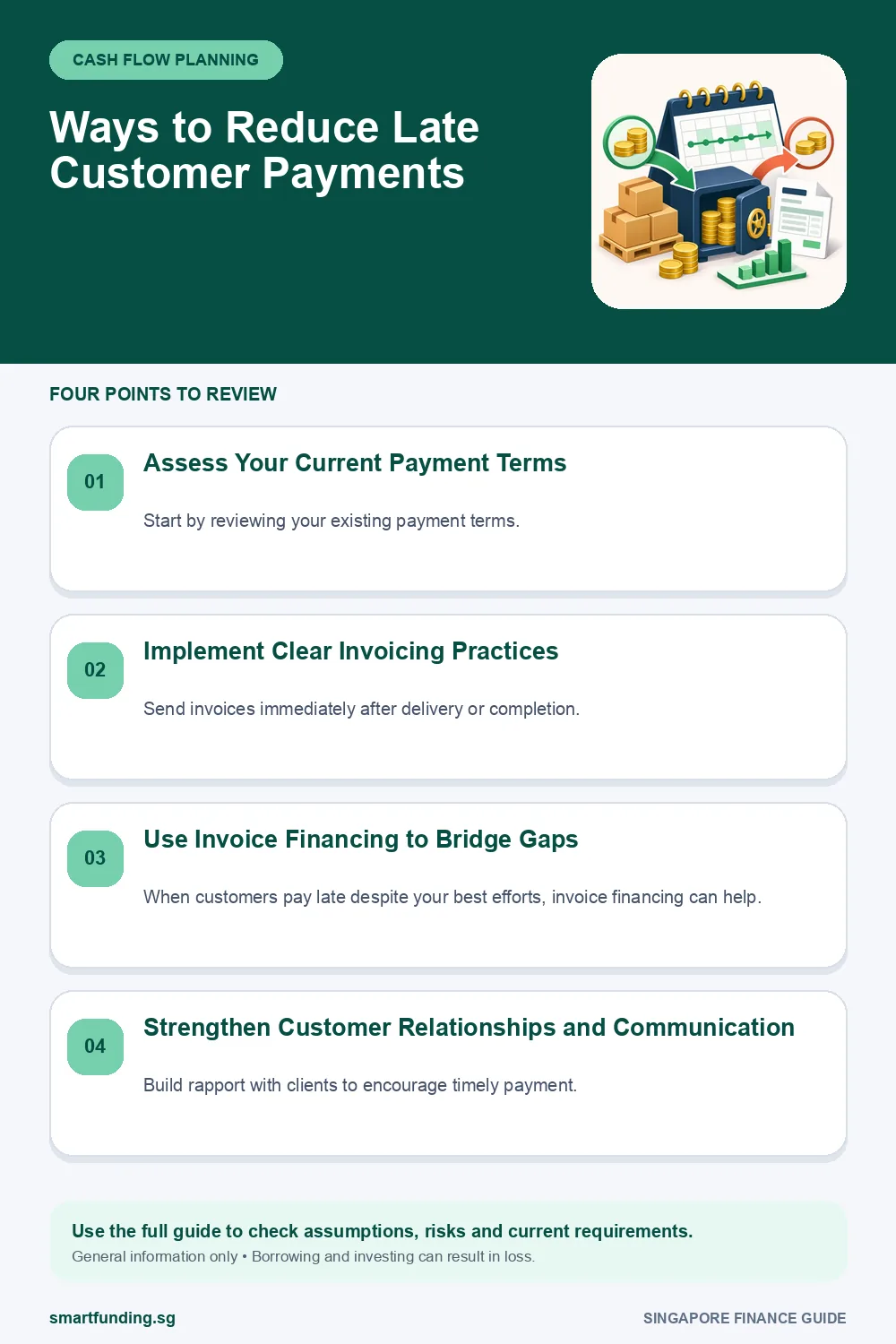
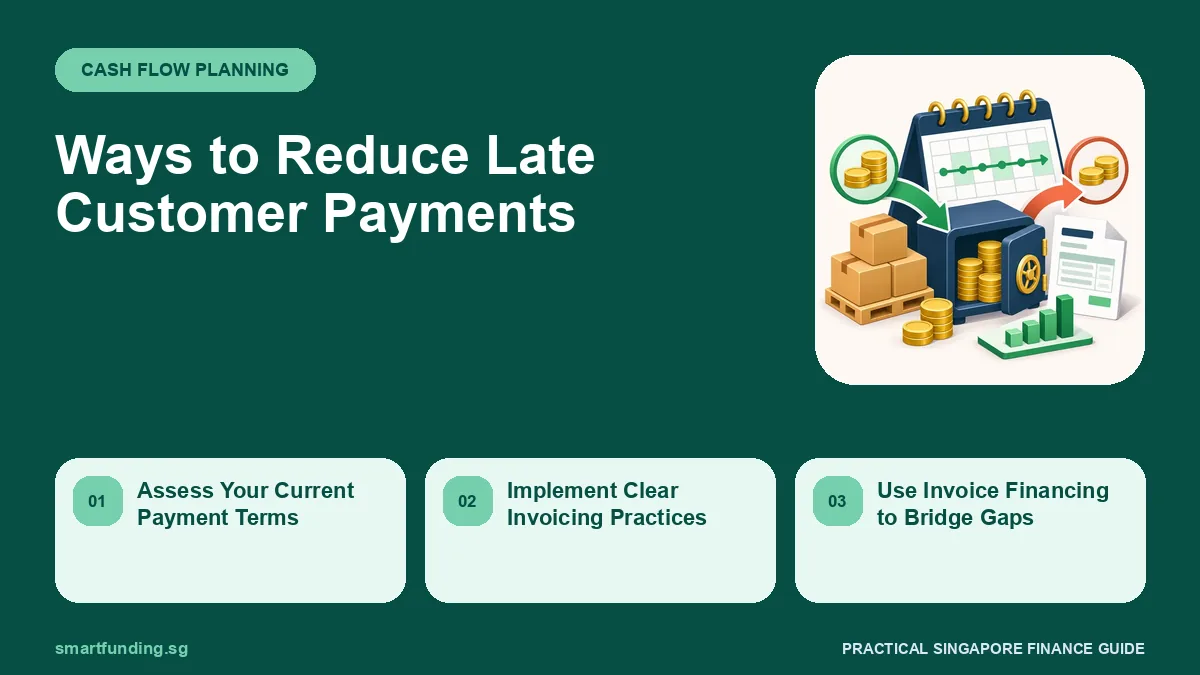
Assess Your Current Payment Terms
Start by reviewing your existing payment terms. Are they clear and enforceable? In Singapore, common terms include net 30 or net 60 days. If you offer longer periods, consider shortening them. Evaluate your industry standard: for example, construction often has longer cycles, while retail expects immediate payment. Adjust terms based on customer risk: new or slow-paying clients may warrant shorter deadlines or deposits. Document all terms in a written contract or invoice. This step is the foundation for reducing delays.
Implement Clear Invoicing Practices
Send invoices immediately after delivery or completion. Use electronic invoicing with automated reminders. Include all details: due date, late payment consequences, and payment methods. In Singapore, digital invoicing is common and accepted by most businesses. Specify late payment interest or administrative fees, but ensure they comply with the Consumer Protection (Fair Trading) Act or relevant regulations. Verify current rules at the Monetary Authority of Singapore (MAS) or Enterprise Singapore website. Clear invoices reduce disputes and prompt faster payment.
Use Invoice Financing to Bridge Gaps
When customers pay late despite your best efforts, invoice financing can help. This involves selling your unpaid invoices to a financier at a discount to receive early cash. In Singapore, many financial institutions and fintech companies offer this. It is not a loan but a sale of receivables. Assess the cost: the discount rate and any fees. Ensure you understand the terms and that the arrangement does not affect customer relationships. For more details, see our guide on invoice financing in Singapore. This tool is useful for managing cash flow while waiting for payment.
Strengthen Customer Relationships and Communication
Build rapport with clients to encourage timely payment. Send polite payment reminders before the due date. Offer multiple payment channels: bank transfer, PayNow, or credit card. For recurring clients, consider setting up direct debit or standing instructions. In Singapore, PayNow is widely used for instant transfers. Maintain open communication if a customer faces difficulties; negotiate a payment plan if needed. Strong relationships reduce the likelihood of deliberate delays.
Consider Early Payment Incentives
Offer a small discount for early payment, such as a reduction of the invoice amount if paid within a certain period. This is a common practice in many industries. Calculate the cost of the discount against the benefit of faster cash flow. For example, if your cost of capital is a certain rate, a discount that is lower than that rate can be worthwhile. Ensure the incentive is clearly stated on invoices. This approach can accelerate payment without confrontation.
Evaluate Business Capital Solutions
If late payments are chronic, you may need additional working capital. Business capital solutions, such as lines of credit or term loans, can provide a buffer. In Singapore, banks and alternative lenders offer various products. However, borrowing costs money and can increase financial risk if not managed. Assess your ability to repay before taking on debt. For more information, refer to our overview of business capital solutions. Also, review whether your business shows signs that you need to borrow funds, such as persistent cash flow gaps. See our guide on SME funding signs you need to borrow funds. Remember that borrowing can lead to loss if you cannot repay.
Frequently asked questions
What legal steps can I take if a customer does not pay?
In Singapore, you can send a letter of demand, engage a debt collection agency, or file a claim in the Small Claims Tribunals (for amounts up to a certain limit) or the State Courts. Legal action can be costly and time-consuming. Always attempt negotiation first. Verify current limits and procedures at the Community Justice and Tribunals System or with a lawyer.
How do I handle late payments from overseas customers?
Cross-border payments involve additional risks like currency fluctuations and longer settlement times. Use secure payment methods such as letters of credit or escrow services. Include clear payment terms in the contract, specifying currency and dispute resolution. In Singapore, the Singapore International Arbitration Centre can help resolve disputes. Check with Enterprise Singapore for trade financing options.
Should I charge late payment interest?
Yes, if your contract allows it. In Singapore, you can charge interest on overdue amounts, but the rate must be reasonable and disclosed upfront. The Late Payment Interest Act does not apply to all contracts, so include a clause in your terms. Verify current legal guidance at the Ministry of Law website. Charging interest can deter delays but may strain relationships if not communicated clearly.
Note: Schemes, taxes, regulations, and licensing details can change. Always verify with official Singapore sources such as MAS, Enterprise Singapore, ACRA, or IRAS when directly relevant. Borrowing and investing can cause loss; assess affordability and risk before proceeding.