SmartFunding insights
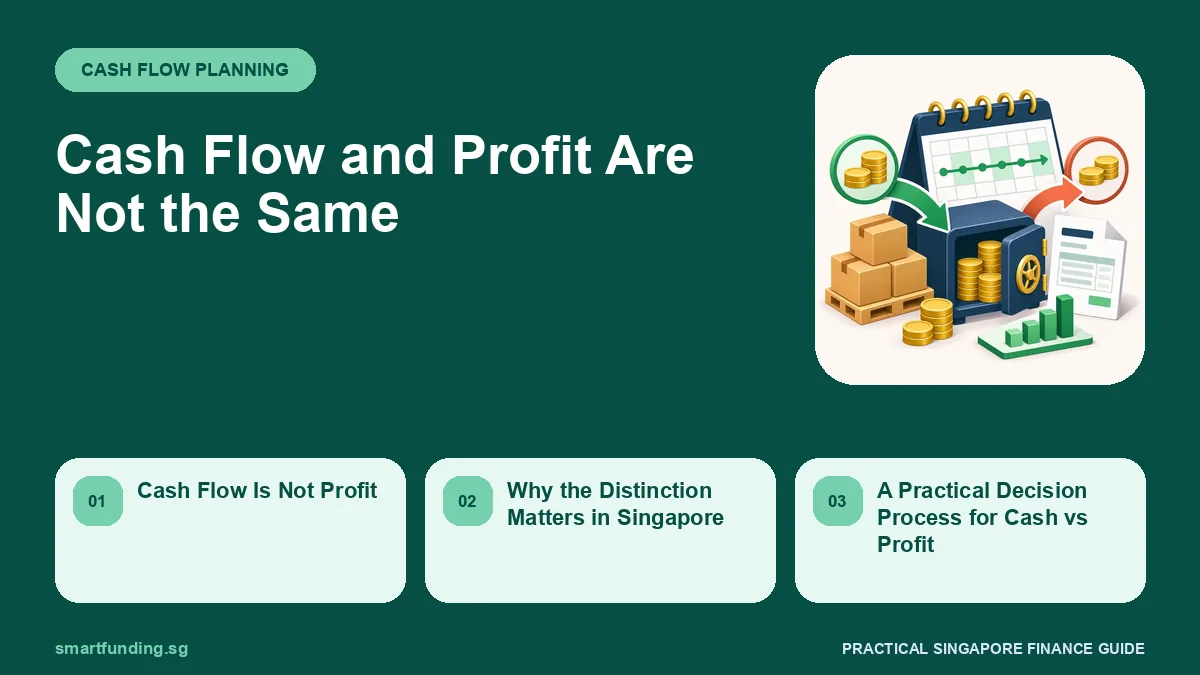
Cash Flow and Profit Are Not the Same
Learn why cash flow and profit are distinct in Singapore finance. A practical decision process to manage both for business survival and growth.
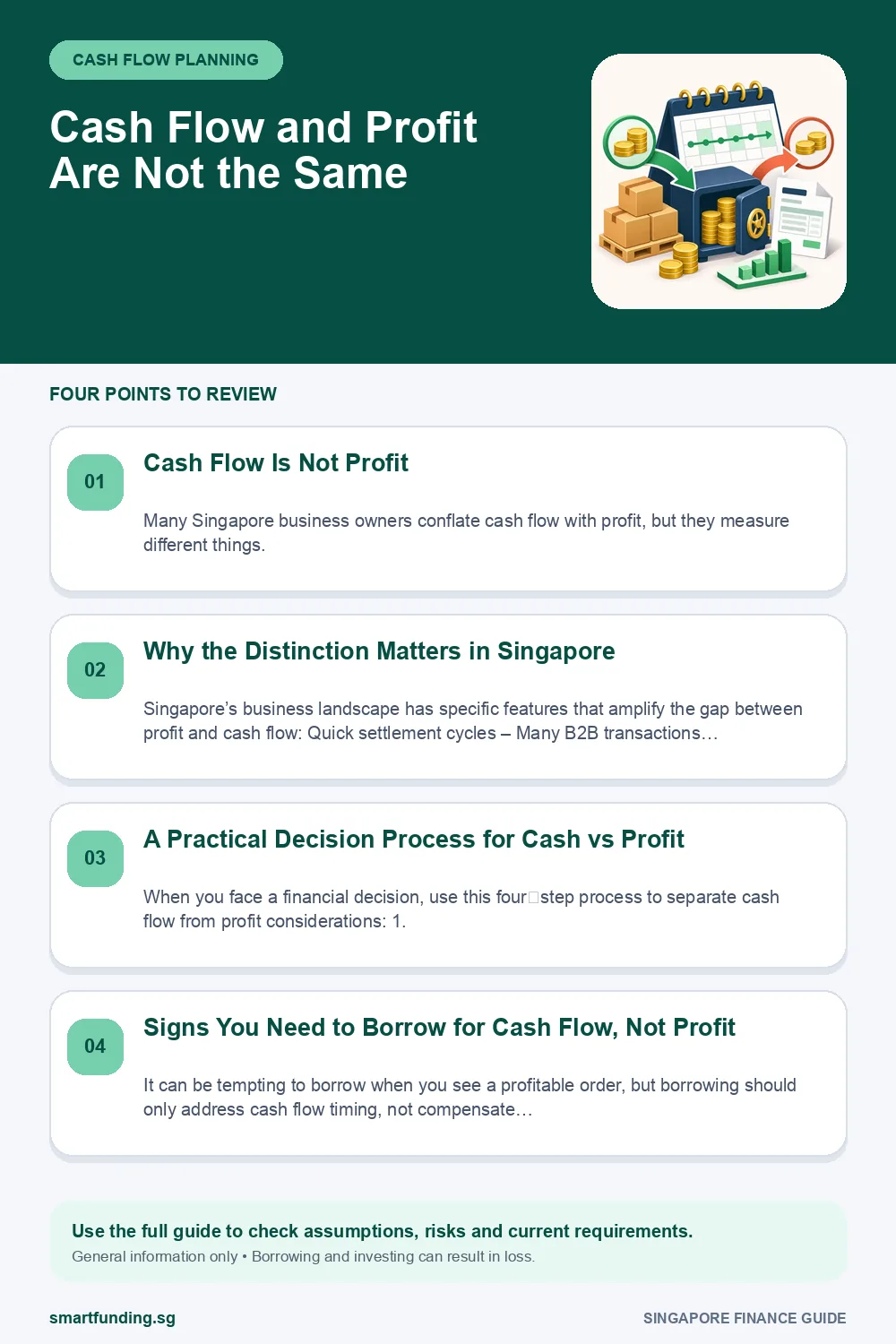
Cash Flow Is Not Profit
Many Singapore business owners conflate cash flow with profit, but they measure different things. Profit is the surplus after deducting all expenses from revenue. Cash flow is the timing and availability of money entering and leaving your business. A company can be profitable on paper yet run out of cash to pay suppliers, rent, or salaries. In Singapore’s fast‑payment environment, where GIRO and PayNow settle quickly, mismatches in timing can be especially damaging. Understanding the difference is the first step to making sound financial decisions.
Why the Distinction Matters in Singapore
Singapore’s business landscape has specific features that amplify the gap between profit and cash flow:
- Quick settlement cycles – Many B2B transactions use PayNow or GIRO, so late payments from customers can cause immediate cash crunches even if you have healthy profit margins.
- High operating costs – Office rentals, foreign worker levies, and CPF contributions are due on fixed dates, regardless of when your customers pay.
- GST timing – You may need to pay GST to IRAS quarterly or monthly, but your customers might not have paid you yet. This creates a cash outflow ahead of revenue collection.
Because of these factors, a profitable business can fail if it cannot meet short‑term obligations. The solution is not just to increase sales, but to manage the timing of cash movements.
A Practical Decision Process for Cash vs Profit
When you face a financial decision, use this four‑step process to separate cash flow from profit considerations:
- Check your cash runway – Look at your bank balance and upcoming fixed payments (rent, salaries, loan instalments) for the next 30 days. If you cannot cover these, you have a cash flow problem, even if your profit statement shows a surplus.
- Assess your profit margin – Calculate your gross and net profit margins. If margins are thin, a small delay in payment can turn a profitable job into a cash drain.
- Decide the nature of the gap – Is the gap caused by timing (e.g., waiting for a big invoice to be paid) or by a structural deficit (e.g., selling below cost)? If it is timing, you may need short‑term funding. If it is structural, you need to raise prices or cut costs.
- Choose a solution that matches the gap – For timing gaps, consider invoice financing or a short‑term business loan. For structural gaps, revisit your business model before borrowing.
This process helps you avoid taking on debt to cover a profit problem, which can worsen your situation.
Signs You Need to Borrow for Cash Flow, Not Profit
It can be tempting to borrow when you see a profitable order, but borrowing should only address cash flow timing, not compensate for poor margins. Look for these signs:
- You have confirmed orders from creditworthy customers, but they pay in 60 days while your suppliers demand payment in 30 days.
- You have a seasonal spike in sales that requires upfront inventory purchase, but your profit margin on each sale is healthy.
- You are profitable on an annual basis but experience monthly dips because of uneven payment schedules.
If these describe your situation, you may need short‑term funding. A good starting point is to assess whether your business shows signs that you need to borrow funds.
Funding Options That Address Cash Flow Timing
When you have confirmed that your gap is about timing and not profitability, consider these funding types:
- Invoice financing – This lets you draw cash against unpaid invoices. It is suitable if you have reliable customers and clear payment terms. Learn more about invoice financing in Singapore.
- Short‑term business loans – These can cover a specific cash shortfall, such as paying a large supplier deposit. However, you must be confident that future cash inflows will repay the loan without straining your operations.
- Trade credit or supplier financing – Negotiate longer payment terms with your suppliers. This is often cheaper than borrowing, but not always available.
Each option has costs and risks. Borrowing and investing can cause loss if the expected cash inflow does not materialise. Always assess whether you can afford the repayments even if the customer pays late.
When to Focus on Profit Instead of Cash Flow
If your cash flow gap persists even after you have smoothed timing with funding, the root cause is likely low profit margins. In that case, do not borrow more. Instead:
- Review your pricing – Are you charging enough to cover all costs, including your own time and overheads?
- Cut non‑essential expenses – Look at subscriptions, utilities, and logistics costs.
- Improve collections – Use digital invoicing and automated reminders to reduce payment delays.
If you need capital to invest in growth that will improve margins, such as buying equipment or expanding your team, you may consider business capital solutions. But remember: any investment carries risk. Only commit funds you can afford to lose, and ensure your business can service the debt even if the growth is slower than expected.
Frequently Asked Questions
How do I know if my business is profitable but has a cash flow problem?
Look at your profit and loss statement for the last six months. If it shows a net profit each month, but your bank balance is often low or negative, you likely have a cash flow timing issue. Track your cash conversion cycle – the time between paying for inputs and receiving payment from customers. If that cycle is longer than your payment terms to suppliers, you have a mismatch.
Can I use a personal loan to cover my business cash flow gap?
Using personal funds for business is possible, but it creates risks. Personal loans are not tax‑deductible for the business, and they mix your personal and business liabilities. If the business fails, you still owe the personal loan. It is usually better to keep business and personal finances separate. Consider business‑specific funding first.
What should I do if my cash flow problem is caused by a slow-paying major customer?
First, review your contract – does it allow late payment penalties? If not, negotiate shorter payment terms or ask for partial upfront payment. You can also use invoice financing to access cash against that customer’s invoice. However, if the customer is consistently slow, consider whether you want to continue the relationship. A profitable sale that never pays is a loss. Always verify current regulations with official sources such as MAS, Enterprise Singapore, ACRA, or IRAS, as rules can change.