SmartFunding insights
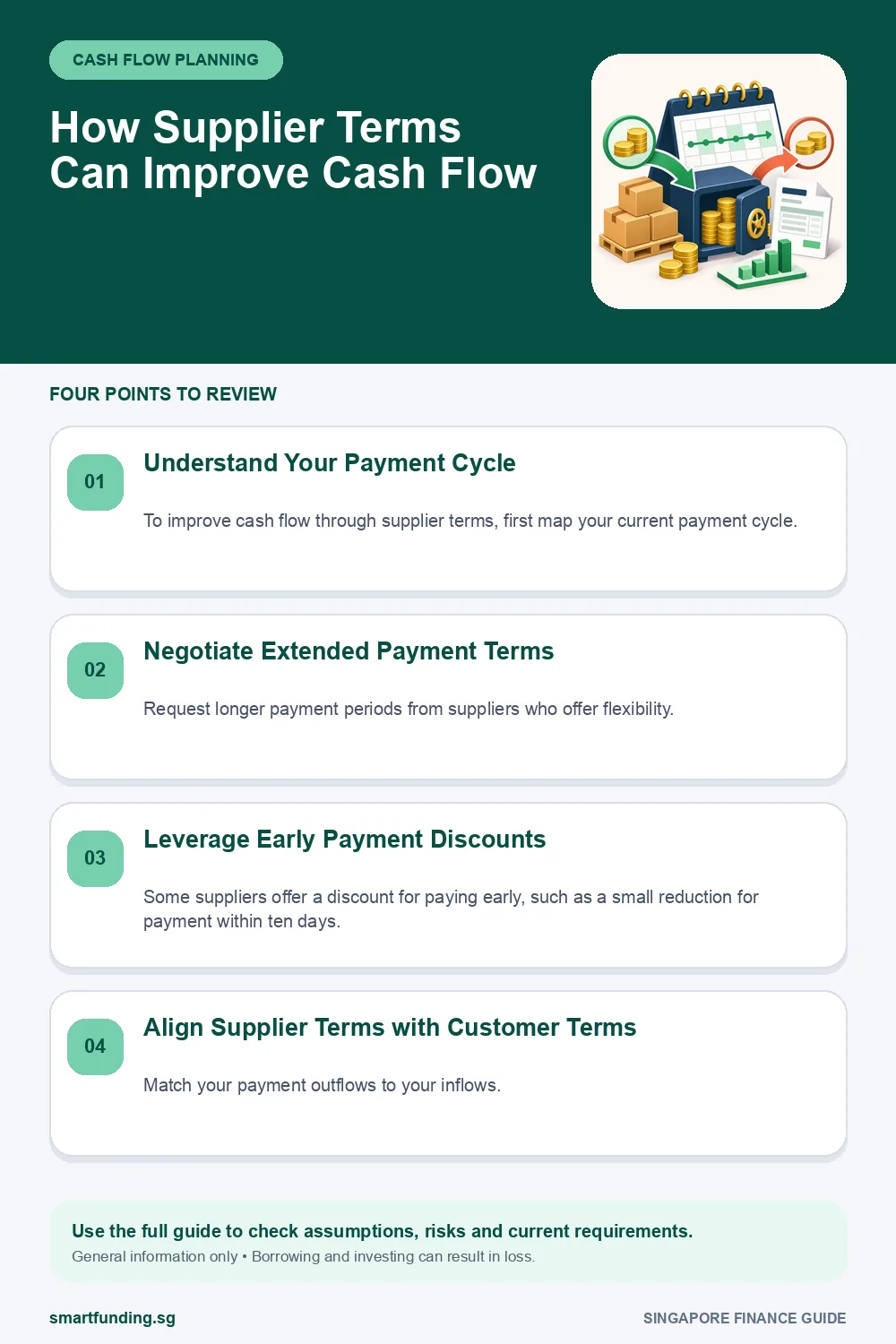
How Supplier Terms Can Improve Cash Flow
Learn how adjusting supplier payment terms can improve cash flow for Singapore SMEs. A practical decision process with actionable steps.
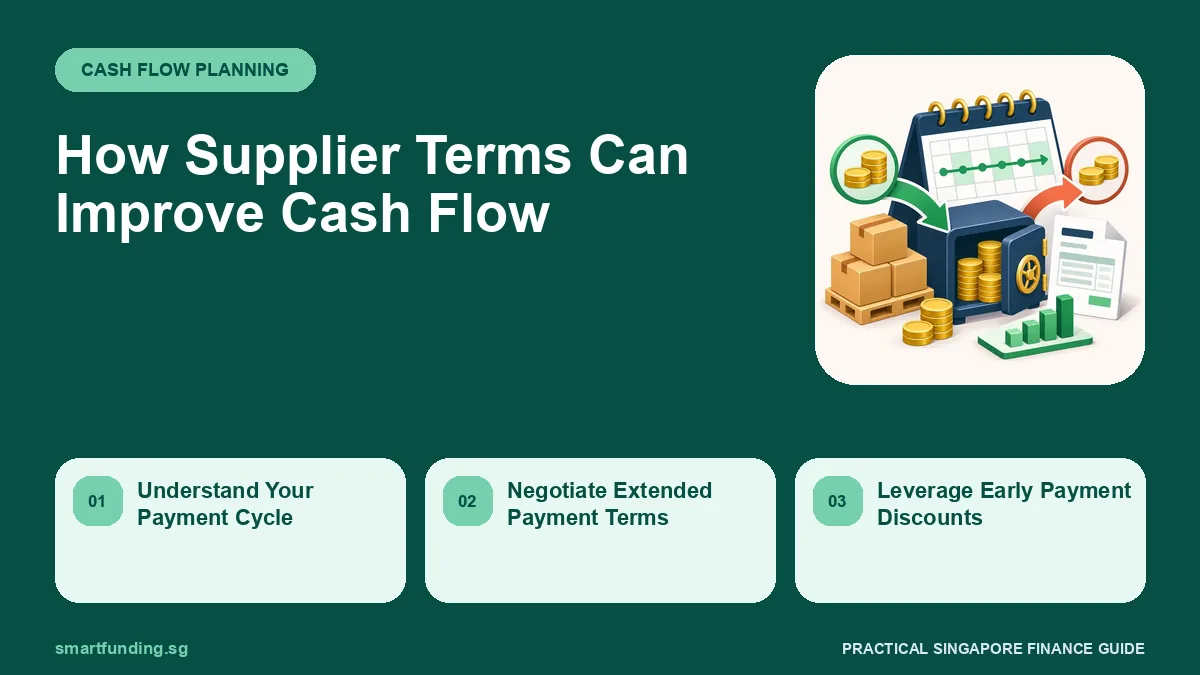
Understand Your Payment Cycle
To improve cash flow through supplier terms, first map your current payment cycle. List the average days between receiving an invoice and paying it. Also note the typical delay from issuing your own invoices to receiving customer payments. This gap is your cash conversion cycle. In Singapore, where business payments often follow net-30 or net-60 terms, the mismatch between paying suppliers and collecting from customers can strain working capital. Calculate your own cycle using actual data from the past three months. This baseline helps you decide which supplier terms to negotiate.
Negotiate Extended Payment Terms
Request longer payment periods from suppliers who offer flexibility. Instead of net-30, ask for net-45 or net-60. Frame the request around your mutual business relationship and your intention to place larger or more regular orders. In Singapore’s trade ecosystem, suppliers may agree if you demonstrate a consistent payment history. Avoid asking for extensions that exceed your own collection period. For example, if customers pay in 45 days, aim for supplier terms of at least 45 days. This alignment reduces the need for external borrowing. Remember that extended terms are not free; some suppliers may adjust prices or request a deposit. Evaluate the trade-off between better cash flow and any cost increase.
Leverage Early Payment Discounts
Some suppliers offer a discount for paying early, such as a small reduction for payment within ten days. Calculate the effective annual benefit of such discounts using the formula: (discount percentage / (1 - discount percentage)) * (365 / (full payment days - discount days)). If the result exceeds your cost of capital, paying early improves cash flow. For Singapore SMEs, early payment discounts can be a low-risk way to reduce expenses. However, only use this if you have sufficient cash reserves or a cheap funding source. Do not stretch your cash position to chase discounts. Compare the discount benefit against your actual borrowing costs from a business loan or sme-funding-signs-you-need-to-borrow-funds.
Align Supplier Terms with Customer Terms
Match your payment outflows to your inflows. If your customers typically pay in 60 days, negotiate supplier terms of at least 60 days. This alignment prevents cash gaps. In Singapore, where some industries have standard payment cycles, you may need to adjust your own invoicing practices. Send invoices promptly and include clear payment due dates. Consider offering small discounts for early customer payments to speed up inflows. The goal is to synchronise your cash cycle so that supplier payments occur after customer receipts. This reduces reliance on overdrafts or short-term loans. For additional flexibility, explore invoice-financing-in-singapore to convert unpaid invoices into immediate cash.
Use Supplier Credit for Working Capital
Supplier credit is a form of trade finance. When you delay payment, you effectively use the supplier’s funds to run your business. This can be cheaper than bank loans if no interest is charged. In Singapore, supplier credit is common in sectors like retail, manufacturing, and wholesale. However, do not overuse it. Excessive delays may harm your credit rating with the supplier or lead to supply disruptions. Treat supplier credit as one component of your working capital strategy. Combine it with other sources such as business-capital-solutions to maintain a balanced funding mix. Always assess the risk: if your customers delay payment, you may still owe the supplier on time.
Monitor Supplier Relationships
Regularly review your payment performance with each key supplier. Track whether you are meeting agreed terms. A strong payment history gives you leverage to negotiate better terms in the future. In Singapore’s business environment, where reputation matters, maintaining trust with suppliers can lead to preferential treatment during tight periods. Communicate proactively if you anticipate a delay. Suppliers may grant a one-time extension if you explain the situation. Do not assume terms are fixed; revisit them annually or when your order volume changes. Use your payment data to support requests for improved terms.
Frequently asked questions
How do I calculate the cost of supplier credit?
Compare the implicit cost of delaying payment against your other funding options. If a supplier offers a discount for early payment, the cost of not taking it is the forgone discount. Use the formula: (discount percentage / (1 - discount percentage)) * (365 / (full payment days - discount days)). This gives an annualised rate. If your bank loan or invoice financing rate is lower, it may be cheaper to borrow and take the discount. If your borrowing rate is higher, delaying payment is better. Always verify current rates with your lender or refer to MAS guidelines for cost disclosure.
Can supplier terms replace a business loan?
Supplier terms can reduce the need for borrowing but may not fully replace a loan. They provide short-term working capital without interest, but they are limited by your supplier’s willingness and your order size. For larger or unexpected cash needs, a business loan or invoice financing may be necessary. In Singapore, SMEs often use a mix of supplier credit and external funding. Assess your cash flow volatility and growth plans. Supplier terms are a tool, not a complete solution. Borrowing and investing carry risks; ensure you can afford repayments.
What regulations affect supplier payment terms in Singapore?
Singapore does not have a statutory maximum payment term for business-to-business transactions. However, the Singapore Business Federation and Enterprise Singapore encourage prompt payment practices. Some sectors have voluntary codes. For government procurement, payment terms are typically 30 days. Verify current practices with Enterprise Singapore or ACRA. Tax implications may arise if you claim deductions for late payment penalties. Check IRAS guidelines. Regulations can change, so consult official sources for the latest information.