SmartFunding insights
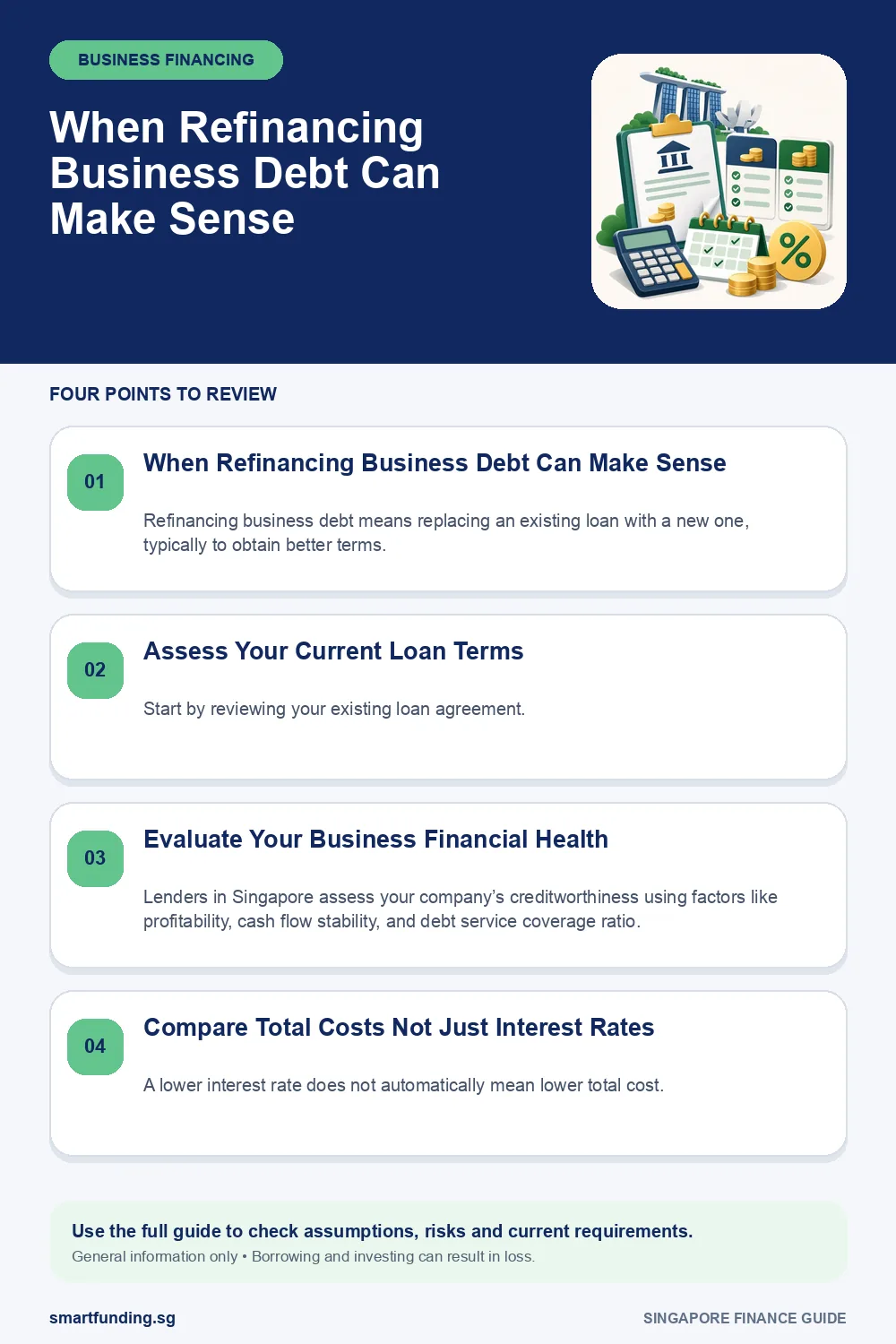
When Refinancing Business Debt Can Make Sense
Refinancing business debt in Singapore can lower costs or improve terms, but only when your financial profile, loan structure, and timing align. This guide offers a practical decis
When Refinancing Business Debt Can Make Sense
Refinancing business debt means replacing an existing loan with a new one, typically to obtain better terms. In Singapore, where lending practices and regulatory frameworks differ from other markets, the decision to refinance should be based on a clear, structured evaluation rather than a general desire to save money.
Assess Your Current Loan Terms
Start by reviewing your existing loan agreement. Look for key features such as the interest rate type (fixed or floating), the remaining tenure, any prepayment penalties, and the total cost of borrowing so far. In Singapore, many business loans include a lock-in period during which early repayment incurs a fee. Understanding these details helps you calculate whether refinancing would be net beneficial.
Evaluate Your Business Financial Health
Lenders in Singapore assess your company’s creditworthiness using factors like profitability, cash flow stability, and debt service coverage ratio. Before approaching a new lender, ensure your financial records are current and that your business can demonstrate consistent revenue. If your financial position has improved since you took the original loan, you may qualify for a lower interest rate. Conversely, if your credit profile has weakened, refinancing may not be viable.
Compare Total Costs Not Just Interest Rates
A lower interest rate does not automatically mean lower total cost. You must account for all fees: application fees, legal fees, valuation fees (if secured by property), and any early repayment penalties on the old loan. In Singapore, some lenders also charge a processing fee or a commitment fee. Calculate the net present value of the new loan’s cash flows versus the old loan’s remaining cash flows. Use a simple formula:
Net Benefit = (Total savings from lower interest) – (Total refinancing costs + prepayment penalty)
Only proceed if the net benefit is positive over the period you expect to hold the new loan.
Consider the Loan Structure and Tenure
Refinancing can also change the loan’s structure. For example, you might switch from a floating rate to a fixed rate for certainty, or extend the tenure to reduce monthly payments. However, extending tenure may increase total interest paid over the life of the loan. In Singapore, where economic conditions can shift quickly, choose a structure that aligns with your cash flow projections. If your business has seasonal revenue, a loan with flexible repayment options might be more suitable.
Understand Regulatory and Tax Implications
Singapore’s regulatory environment affects refinancing decisions. For instance, if your loan is secured by property, there may be stamp duty implications. Interest expenses are generally tax-deductible, but the deductibility depends on the use of funds. Check the latest guidelines from the Inland Revenue Authority of Singapore (IRAS) and the Monetary Authority of Singapore (MAS) for any relevant rules. These can change, so verify at the official source before making a decision.
Explore Available Financing Options
Before committing to a specific refinancing product, compare offerings from multiple lenders. You can start by reviewing general financing options available to Singapore SMEs. Also consider the seven key factors outlined in this guide on SME financing. Finally, when you are ready to apply, you can submit a borrowing enquiry to explore potential terms. Remember that borrowing always involves risk—if you cannot meet the new repayment schedule, you may lose collateral or damage your credit rating.
Frequently Asked Questions
What is the best time to refinance business debt in Singapore?
The best time is when your business financial health has improved, interest rates are favourable relative to your current rate, and the total cost of refinancing is lower than the remaining cost of your existing loan. Avoid refinancing solely to lower monthly payments if it significantly extends the loan term and increases total interest.
Can I refinance if my business has a poor credit score?
It is more difficult but not impossible. Some lenders in Singapore consider other factors such as collateral, personal guarantees, or a strong business plan. However, you may face higher interest rates or stricter terms. Assess whether the new loan’s conditions are affordable and whether you can realistically meet them.
What documents do I need to apply for refinancing?
Typical requirements include financial statements (profit and loss, balance sheet), bank statements, tax filings, a copy of the existing loan agreement, and a business plan if the loan purpose has changed. Specific requirements vary by lender, so check directly with each institution. Ensure all documents are up to date and accurate.