SmartFunding insights
How to Read a Business Loan Offer
A practical guide to dissecting a business loan offer in Singapore. Learn to assess key terms, costs, and risks before signing.
A business loan offer is a legally binding document. Before signing, you must understand every clause. This guide provides a step-by-step process to evaluate an offer, focusing on what matters for a Singapore-registered business.
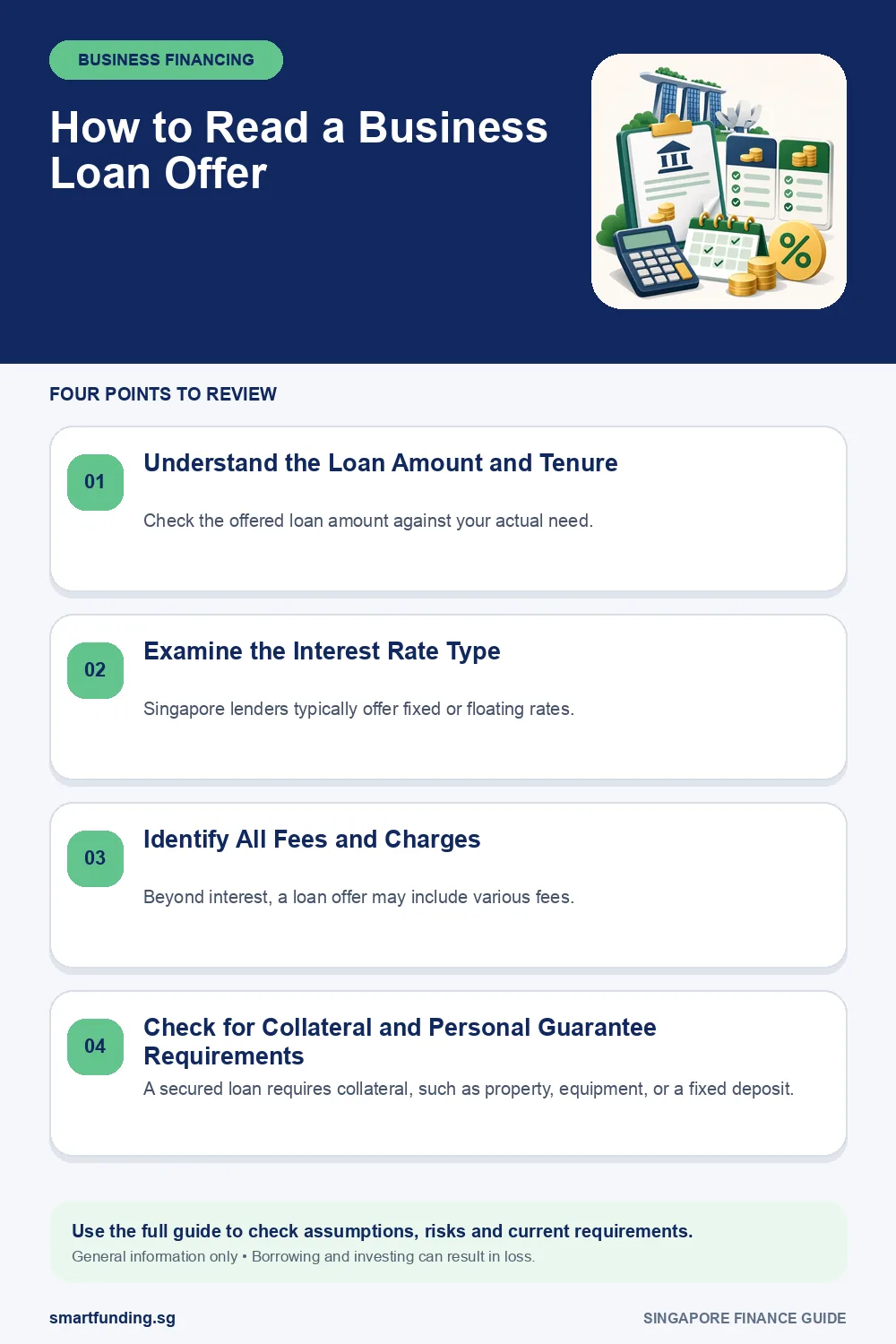
Understand the Loan Amount and Tenure
Check the offered loan amount against your actual need. Borrowing more than necessary increases interest costs and monthly repayment pressure. The tenure — the period over which you repay — directly affects your cash flow. A longer tenure means smaller monthly payments but higher total interest. A shorter tenure reduces total interest but demands larger monthly outflows. Use a loan calculator to model different tenures with your expected revenue. Never accept a tenure that strains your operating budget.
Examine the Interest Rate Type
Singapore lenders typically offer fixed or floating rates. A fixed rate stays the same for the entire loan term, giving you predictable payments. A floating rate, often tied to the Singapore Overnight Rate Average (SORA), can change. If the offer uses a floating rate, ask about the margin added to SORA and how often the rate resets. Floating rates may start lower but carry the risk of higher payments if SORA rises. Verify current SORA trends at the Monetary Authority of Singapore (MAS) website. Choose the type that matches your risk appetite and cash flow stability.
Identify All Fees and Charges
Beyond interest, a loan offer may include various fees. Common ones in Singapore include:
- Processing fee: A one-time charge for setting up the loan.
- Early repayment fee: A penalty if you pay off the loan before the end of the tenure.
- Late payment fee: A charge if you miss a monthly instalment.
- Legal or valuation fees: For secured loans against property or equipment.
Ask the lender for a complete list of fees in Singapore dollars. Compare these across multiple offers. A loan with a lower interest rate but high fees could be more expensive overall. Use the effective interest rate (EIR) to compare total costs. The EIR includes fees and compounding, giving you a true cost figure.
Check for Collateral and Personal Guarantee Requirements
A secured loan requires collateral, such as property, equipment, or a fixed deposit. If you default, the lender can seize the asset. An unsecured loan does not require collateral but often has a higher interest rate. Many Singapore lenders also ask for a personal guarantee from the business owner or director. This means you are personally liable if the business cannot repay. Understand the extent of the guarantee — is it limited to a specific amount or unlimited? Consider the risk to your personal assets before agreeing.
Review Repayment Schedule and Flexibility
The repayment schedule shows when payments are due. Most business loans use monthly instalments. Check if the schedule aligns with your business’s cash flow cycle. For example, if your business has seasonal revenue, ask about a flexible repayment option. Some lenders offer a grace period where you pay only interest for the first few months. Others allow a repayment holiday. Ensure you understand the exact dates, amounts, and whether payments are automatic or manual. Late payments can hurt your credit score with Singapore’s credit bureaus.
Read the Fine Print on Default and Covenants
Default clauses define what happens if you miss a payment or breach a condition. The lender may demand immediate full repayment of the outstanding amount plus penalties. Some loan agreements include financial covenants, such as maintaining a minimum revenue or debt-service coverage ratio. Breaching a covenant can trigger default even if you make all payments. Ask the lender to explain every covenant in plain language. If a covenant seems too restrictive, negotiate. You can also seek advice from Enterprise Singapore or a legal professional familiar with Singapore contract law.
Frequently Asked Questions
What is the difference between a secured and unsecured business loan?
A secured loan requires you to pledge an asset, such as property or equipment, as collateral. If you default, the lender can seize the asset. An unsecured loan does not require collateral but typically has a higher interest rate and may require a personal guarantee. Your choice depends on your asset base and risk tolerance.
How do I compare loan offers from different lenders?
Focus on the effective interest rate (EIR), which includes all fees and compounding. Also compare the loan tenure, repayment flexibility, and any penalties for early repayment. Use a standardised comparison table. Check if the lender is regulated by MAS or accredited by Enterprise Singapore. Always read the full terms and conditions.
Can I negotiate the terms of a business loan offer?
Yes, many terms are negotiable. You can ask for a lower interest rate, reduced fees, or a longer tenure. Lenders may be more flexible if you have a strong credit history or existing relationship. Put any negotiated changes in writing before signing. If you are unsure, consult a professional advisor.
For more guidance, explore financing options available to Singapore businesses. Before applying, review key considerations for SME financing. When you are ready, you can apply for a loan through a licensed lender.
Note: Loan terms, regulations, and licensing details can change. Always verify current information with official sources such as MAS, Enterprise Singapore, ACRA, or IRAS. Borrowing involves financial risk. Assess your business’s ability to repay before committing.